

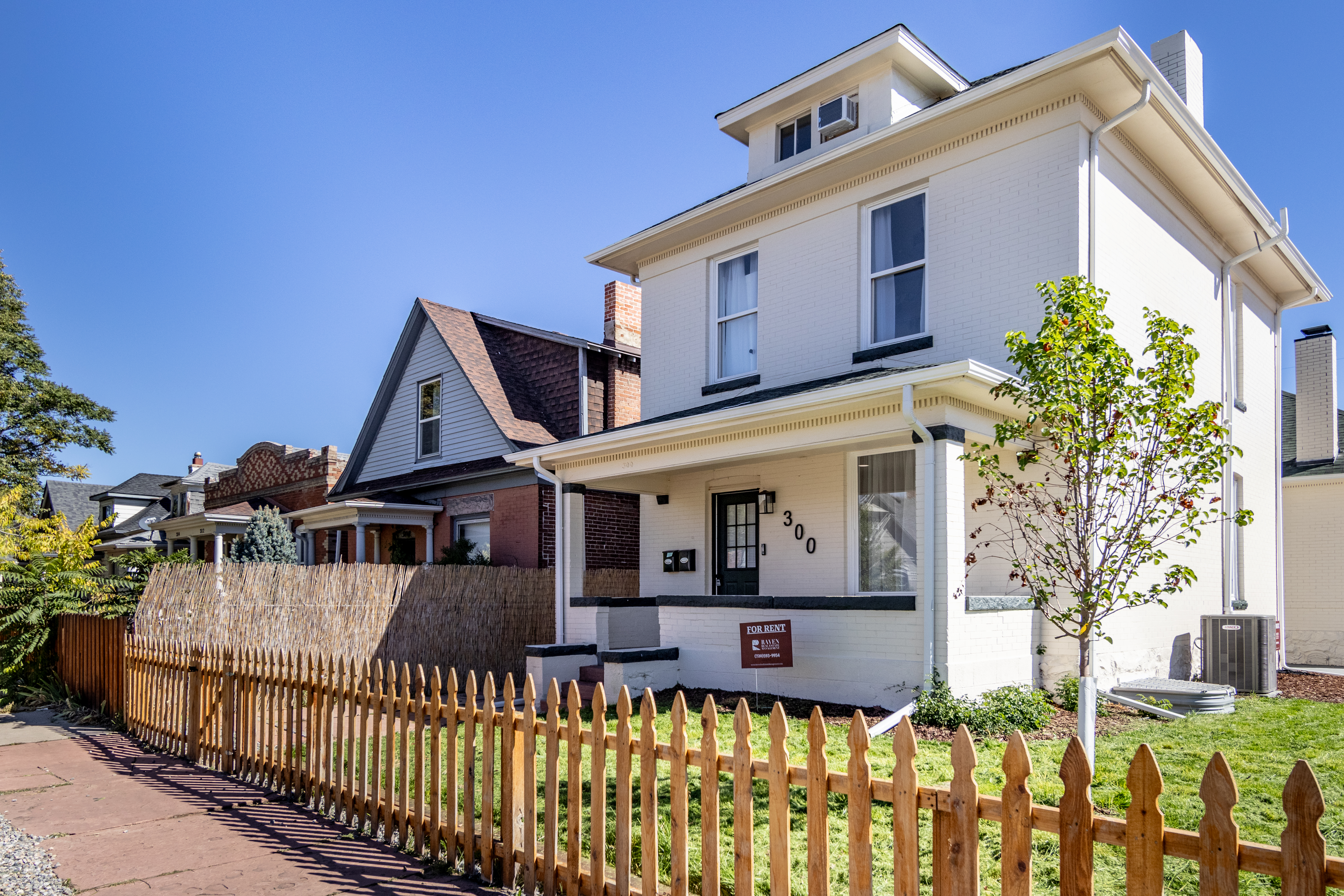
You own a rental property in Denver. Do you really need to pay someone else to manage it?
Maybe not.
Plenty of Colorado landlords successfully manage their own rental properties. If you have the time, enjoy being hands-on, understand your responsibilities as a landlord, and don't mind being the person your tenant calls when something goes wrong, self-management can absolutely work.
But there's another question worth asking:
Just because you can manage your own rental property, does that mean you want to?
The difference between owning a rental property and managing one can be significant.
Finding tenants, responding to inquiries, coordinating showings, screening applicants, collecting rent, managing maintenance, communicating with tenants, handling renewals, keeping records, staying current with Colorado rental requirements, and preparing the property for the next tenant all take time.
For some owners, that's part of the investment.
For others, it's another job they never intended to have.
If you're deciding between self-managing your Denver rental property and hiring a professional property manager, here's what you should consider.
What Does Self-Managing a Rental Property Actually Involve?
At first, self-management can sound fairly simple:
Find a tenant. Sign a lease. Collect rent.
But the reality of managing a rental property usually involves considerably more.
As the landlord, you may be responsible for:
- Determining the appropriate rental price
- Preparing the property for the rental market
- Photographing and marketing the rental
- Writing and publishing rental listings
- Responding to prospective tenants
- Coordinating property showings
- Processing rental applications
- Screening prospective tenants
- Preparing lease documentation
- Coordinating move-in
- Collecting rent
- Maintaining financial records
- Responding to tenant questions
- Managing maintenance requests
- Finding and coordinating contractors
- Handling emergency repairs
- Conducting property inspections
- Managing lease renewals
- Staying current with applicable rental regulations
- Coordinating move-out
- Evaluating property condition and damages
- Preparing the property for the next tenant
- Starting the process all over again
Sometimes a rental property requires very little attention for months.
Other times, the furnace stops working on a Saturday morning in January.
That's the unpredictable part of property management.
You don't necessarily get to choose when the property needs you.
The Advantages of Self-Managing Your Denver Rental
Professional property management isn't automatically the right choice for every landlord.
There are some legitimate advantages to managing your own rental.
You Save the Property Management Fee
This is the most obvious advantage.
Denver property management companies commonly charge an ongoing monthly management fee, and additional charges may apply for leasing, renewals, onboarding, maintenance coordination, or other services.
If you manage the property yourself, that money stays with you.
For owners trying to maximize cash flow, particularly on a property with thin margins, that can be meaningful.
If you're wondering what professional management typically costs, read our guide:
How Much Does Property Management Cost in Denver? A 2026 Guide for Rental Property Owners
You Maintain Complete Control
When you self-manage, every decision is yours.
You choose how the property is marketed.
You communicate directly with applicants.
You choose your contractors.
You approve repairs.
You communicate with the tenant.
For owners who enjoy being closely involved in their investments, that level of control can be appealing.
You Know the Property Extremely Well
If the rental was previously your home, you probably know every strange noise, quirky light switch, appliance, repair, and improvement.
That knowledge can make managing maintenance easier, particularly if you're already comfortable working with contractors and maintaining a home.
You Build a Direct Relationship With Your Tenant
Some owners genuinely enjoy this.
With only one or two rentals, maintaining direct communication with tenants can be manageable and sometimes rewarding.
Professional property management doesn't need to replace good relationships, but some owners simply prefer to handle that relationship themselves.
The Real Cost of Self-Managing a Rental Property
The biggest misconception about self-management is that it's free.
It isn't.
You simply pay for it differently.
Instead of paying a property management company, you're contributing your own time, availability, knowledge, organization, and responsibility.
That may be a perfectly good trade.
But it's still a trade.
Your Time Has Value
Imagine your rental requires only four hours of attention in an average month.
That's:
48 hours per year.
And four hours can disappear surprisingly quickly between bookkeeping, tenant messages, a maintenance request, a contractor appointment, and lease administration.
During a turnover or significant maintenance issue, that number can increase dramatically.
The question isn't simply:
"How much would a property manager cost?"
It's also:
"What is my own time worth?"
If you're spending evenings answering tenant messages, taking time away from work to meet contractors, or rearranging your weekend around property issues, self-management has a cost even if it doesn't appear as a line item on your bank statement.
Vacancy Has a Cost Too
One of the most important responsibilities of managing a rental is minimizing unnecessary vacancy.
Let's say your Denver rental generates $2,000 per month.
Every week it sits empty represents roughly $460 in unrealized gross rental income.
A full month represents:
$2,000.
This is why rental pricing and marketing matter.
Pricing a property too high can cause it to sit.
Pricing it too low can leave income on the table throughout the lease.
Poor photography can make an otherwise great property easy to scroll past.
Slow responses to inquiries can send prospective tenants to another listing.
Limited showing availability can create another obstacle.
Professional management doesn't eliminate vacancy, but rental pricing, marketing, inquiry management, and showing coordination are meaningful parts of the job.
Maintenance Isn't Just About Calling a Plumber
One of the most time-consuming parts of being a landlord can be maintenance.
Imagine your tenant sends you a message:
"There's water underneath the kitchen sink."
Now what?
Someone needs to determine how serious the issue is.
Is it actively leaking?
Can the water be shut off?
Does someone need to respond immediately?
Which vendor should handle it?
When can the contractor get there?
How will they access the property?
Does the repair need owner approval?
Did the repair actually solve the problem?
Does anything else need remediation?
And who follows up with the tenant?
The cost of the plumber is one thing.
Managing the situation is another.
For self-managing landlords, all of those decisions and communications belong to you.
Denver Rental Owners Also Have Local Requirements to Consider
Managing a rental property isn't only about the physical home and the tenant relationship.
There's also compliance.
Denver requires owners or property managers of residential rental properties to obtain a residential rental license. The city's program applies broadly to residential properties rented for 30 days or more, including single-family homes, condos, townhouses, duplexes, apartments, and other residential property types.
Single-unit rental properties have been subject to Denver's licensing requirement since January 1, 2024.
Colorado landlords also operate within state and federal requirements concerning areas such as fair housing, habitability, tenant screening, leases, notices, security deposits, and other parts of the landlord-tenant relationship.
The point isn't that being a landlord is impossibly complicated.
It's that staying informed is part of the job.
If you're going to self-manage, regulatory awareness needs to be part of your management plan just like rent collection and maintenance.
This article provides general information and is not legal advice. Rental property owners should verify current state and local requirements and consult qualified legal counsel regarding their individual circumstances.
When Does Self-Managing a Denver Rental Make Sense?
We're a property management company, but we'll say it:
Not every rental owner needs us.
Self-management may be a perfectly reasonable choice if:
- You live near your rental property
- You have plenty of time to manage it
- You enjoy communicating with tenants
- You're comfortable handling difficult conversations
- You have reliable contractors
- You're organized with paperwork and accounting
- You're comfortable marketing a vacant property
- You understand tenant screening requirements
- You're willing to keep up with changing rental regulations
- You're available when maintenance problems arise
- You want to be personally involved in the property's day-to-day operation
If that sounds like you, self-management may be a great fit.
But if you're reading that list and thinking:
"I really don't want to do most of that..."
That's useful information too.
When Hiring a Denver Property Manager Starts to Make Sense
Professional property management becomes particularly valuable when the responsibilities of the rental begin competing with everything else in your life.
That might happen because:
You Don't Live Near the Property
Managing a Denver rental from Colorado Springs is inconvenient.
Managing one from California, Texas, Florida, or another state can be considerably harder.
When something requires someone physically at the property, proximity matters.
You Have a Demanding Career
If your workday is already full, stopping to coordinate a plumber at 11:30 on Tuesday morning probably isn't how you want to spend it.
You Own Multiple Rental Properties
One rental might be manageable.
Three, five, or ten can become an entirely different operation.
You're Moving Out of Colorado
Maybe the rental wasn't originally part of the plan.
You're relocating, but selling your Denver home doesn't feel like the right decision.
Keeping it as an investment can make sense, but managing it from another state introduces a new set of challenges.
You Don't Want to Manage Tenants
This is a completely legitimate reason.
Owning rental property doesn't require you to enjoy property management.
You may love the investment and dislike the operational side of being a landlord.
Those are two separate things.
You Want Your Time Back
Sometimes this is the entire reason.
A rental property may be part of your investment portfolio.
It doesn't necessarily need to become your second job.
Not Sure Whether Professional Management Is Worth It?
Start with the numbers and your own priorities.
Majordomo Property Group can help you understand your Denver-area property's rental potential, what professional management would look like, and which responsibilities you'd actually be handing off.
There's no need to decide that professional management is right for you before having the conversation.
Boutique, hands-on Denver property management built around stewardship + hospitality.
Request a Rental Property Evaluation
Tell us about your property and what you're currently managing yourself. We'll help you understand what working with Majordomo could look like.
What Does a Denver Property Manager Take Off Your Plate?
The exact services depend on the property management company and management agreement, but professional rental property management may include:
Rental Pricing
Evaluating comparable rental properties, current inventory, location, condition, amenities, and demand to establish a competitive rental rate.
Property Marketing
Preparing the listing, photographing the property, advertising it, responding to inquiries, and coordinating showings.
Tenant Placement
Managing applications, screening prospective tenants, preparing lease documentation, and coordinating move-in.
Rent Collection
Collecting rent, monitoring payments, maintaining records, and providing owner statements.
Tenant Communication
Giving tenants a consistent point of contact for questions, concerns, and maintenance needs.
Maintenance Coordination
Receiving requests, communicating with tenants, coordinating vendors, monitoring repairs, and keeping the owner informed.
Lease Administration
Managing renewals, notices, documentation, move-ins, and move-outs.
Property Oversight
Helping keep an eye on the condition and operation of the property while the owner focuses on the investment itself.
In other words:
You still own the rental property.
You simply don't have to personally perform every job required to operate it.
Self-Managing vs. Property Management: A Side-by-Side Comparison
| Responsibility | Self-Managing | Professional Management |
|---|---|---|
| Rental pricing | You research and price | Manager evaluates the market |
| Marketing | You create and manage listings | Manager handles marketing |
| Inquiries | You respond | Manager responds |
| Showings | You coordinate | Manager coordinates |
| Screening | You manage applications | Manager manages screening |
| Lease administration | You handle documentation | Manager handles administration |
| Rent collection | You collect and track | Manager manages collection |
| Tenant communication | You are the contact | Manager is the contact |
| Maintenance | You coordinate vendors | Manager coordinates vendors |
| Emergencies | You respond | Manager coordinates response |
| Rental requirements | You stay informed | Professional support helps manage operations |
| Owner involvement | High | Flexible / reduced |
| Monthly management fee | None | Yes |
| Time commitment | Potentially significant | Significantly reduced |
The question isn't which column is universally "better."
It's:
Which one fits the way you want to own rental property?
There's Also an Emotional Side to Property Management
This is something that doesn't get discussed enough.
Rental properties can be personal.
Maybe this was your first home.
Maybe you renovated the kitchen yourself.
Maybe your kids grew up there.
Maybe you've spent years maintaining it.
Then someone calls and tells you the hardwood floor is scratched.
Or the garden you loved isn't being maintained the way you would maintain it.
Or a tenant disagrees with you about a repair.
It's surprisingly easy for emotion to enter the relationship.
A property manager creates some separation between owning the asset and managing the tenancy.
That distance can sometimes make it easier to approach decisions consistently and professionally.
Your home becomes an investment property.
That doesn't mean you stop caring about it.
It means someone else helps manage the day-to-day relationship around it.
Your Rental Property Isn't Just Another Door in a Portfolio
There's a phrase you'll hear frequently in property management:
Doors.
A company manages 100 doors.
500 doors.
5,000 doors.
Operationally, that makes sense.
But most individual property owners don't think about their homes that way.
You probably don't own Door #237.
You own the home you lived in before moving.
The first investment property you worked hard to buy.
The townhouse you're keeping as part of your long-term financial plan.
The rental you're hoping to eventually pass down.
Or the beginning of a real estate portfolio you're building one property at a time.
At Majordomo Property Group, we intentionally take a different approach.
Your rental property isn't just another door in a portfolio.
Boutique Denver Property Management Built Around Stewardship + Hospitality
Majordomo Property Group is intentionally boutique and hands-on.
Our approach to Denver property management is built around two ideas:
Stewardship + hospitality.
Stewardship means understanding that an owner is trusting us with a valuable asset.
We want to know the property we're managing.
We want to understand the owner's priorities.
We want to pay attention when something changes.
We want owners to know what's happening with their investment.
Hospitality means remembering that there's also a person living inside that investment.
Tenants deserve a well-maintained home, responsive communication, and someone they can reach when something needs attention.
We don't think those goals compete with one another.
Taking good care of tenants can be part of taking good care of the property.
Thoughtful maintenance can protect the owner's investment.
Responsive communication can prevent small problems from becoming larger ones.
A positive rental experience can help support longer and more successful tenancies.
That's the kind of property management relationship we're interested in building.
We're Not Trying to Become the Biggest Property Management Company in Denver
That's intentional.
We'd rather know the properties we manage.
We'd rather understand our owners' goals.
We'd rather recognize the house when an owner calls.
We'd rather have a real relationship with the people trusting us with their investments.
We're building the kind of property management company we'd want managing our own homes.
For some owners, a large property management company is exactly what they're looking for.
For others, a smaller, more hands-on management relationship is a much better fit.
Knowing which experience you want should be part of choosing your property manager.
So, Should You Self-Manage or Hire a Denver Property Manager?
Ask yourself:
Do I have the time?
Do I have the knowledge?
Do I have reliable vendors?
Am I comfortable dealing directly with tenants?
Can I respond when something goes wrong?
Do I want to keep up with rental requirements?
Do I enjoy managing the property?
And finally:
Is managing this rental the best use of my time?
If the answer is yes, self-management might be exactly right for you.
If the answer is no, that doesn't make the rental a bad investment.
It may simply mean you need someone else handling the operational side of it.
Looking for a Property Manager in Denver?
If you've reached the point where your rental property feels more like another job than an investment, let's talk.
Majordomo Property Group provides boutique, hands-on property management for Denver-area homeowners and rental property investors.
Whether you're currently self-managing, preparing your first rental, moving out of Colorado, or looking for a more personal alternative to your current property management company, we'd love to learn about your property.
Boutique Denver property management.
Hands-on service.
Stewardship + hospitality.
Your rental property isn't just another door in a portfolio.
Request a Rental Property Evaluation
Tell us about your property, what's currently on your plate, and what you'd like property ownership to look like instead.
Let's talk about whether professional management makes sense for you.
Frequently Asked Questions About Self-Managing a Denver Rental
Can I manage my own rental property in Denver?
Yes. Property owners can self-manage their Denver rental properties, provided they comply with applicable local, state, and federal requirements. Denver residential rental properties generally must be licensed under the city's Residential Rental Program.
Do I need a property manager for one rental property?
Not necessarily. Owners with the time, knowledge, organization, local availability, and desire to manage tenants and maintenance may be comfortable self-managing one rental. Professional management becomes particularly useful when an owner doesn't have the time or desire to handle those responsibilities.
How much does a Denver property manager cost?
Denver property management pricing varies by company and service structure. Monthly management is commonly percentage-based or offered at a flat monthly rate, with potential additional charges for tenant placement, renewals, onboarding, or other services. Read our Denver Property Management Fees: What Does It Cost in 2026? guide for a more detailed breakdown.
What does a Denver property manager actually do?
Depending on the management agreement, a property manager can handle rental pricing, marketing, showings, tenant screening, lease administration, rent collection, tenant communication, maintenance coordination, inspections, renewals, move-outs, and other day-to-day rental operations.
Is hiring a property manager worth the money?
That depends on the property and owner. Consider the management fee alongside the value of your time, local availability, experience, comfort with tenant communication, maintenance responsibilities, and desire to remain involved in day-to-day operations.
Can a property manager manage my Denver rental if I live out of state?
Yes. Professional management can be particularly valuable for owners who don't live near their rental because the manager can provide a local point of contact for tenants, vendors, maintenance, leasing, and property oversight.
How do I know if I should stop self-managing my rental?
Common signs include maintenance and tenant communication interfering with your work or personal life, difficulty keeping up with rental requirements, living far from the property, owning multiple rentals, or simply no longer wanting to handle day-to-day management.
